
How To Use Data Analytics To Grow Your Business: The Complete Guide
Learn how to use data analytics to grow your business, understand customer behaviour, improve marketing performance, increase sales, and make smarter business decisions.
GUEST POSTS
6/13/20265 min read
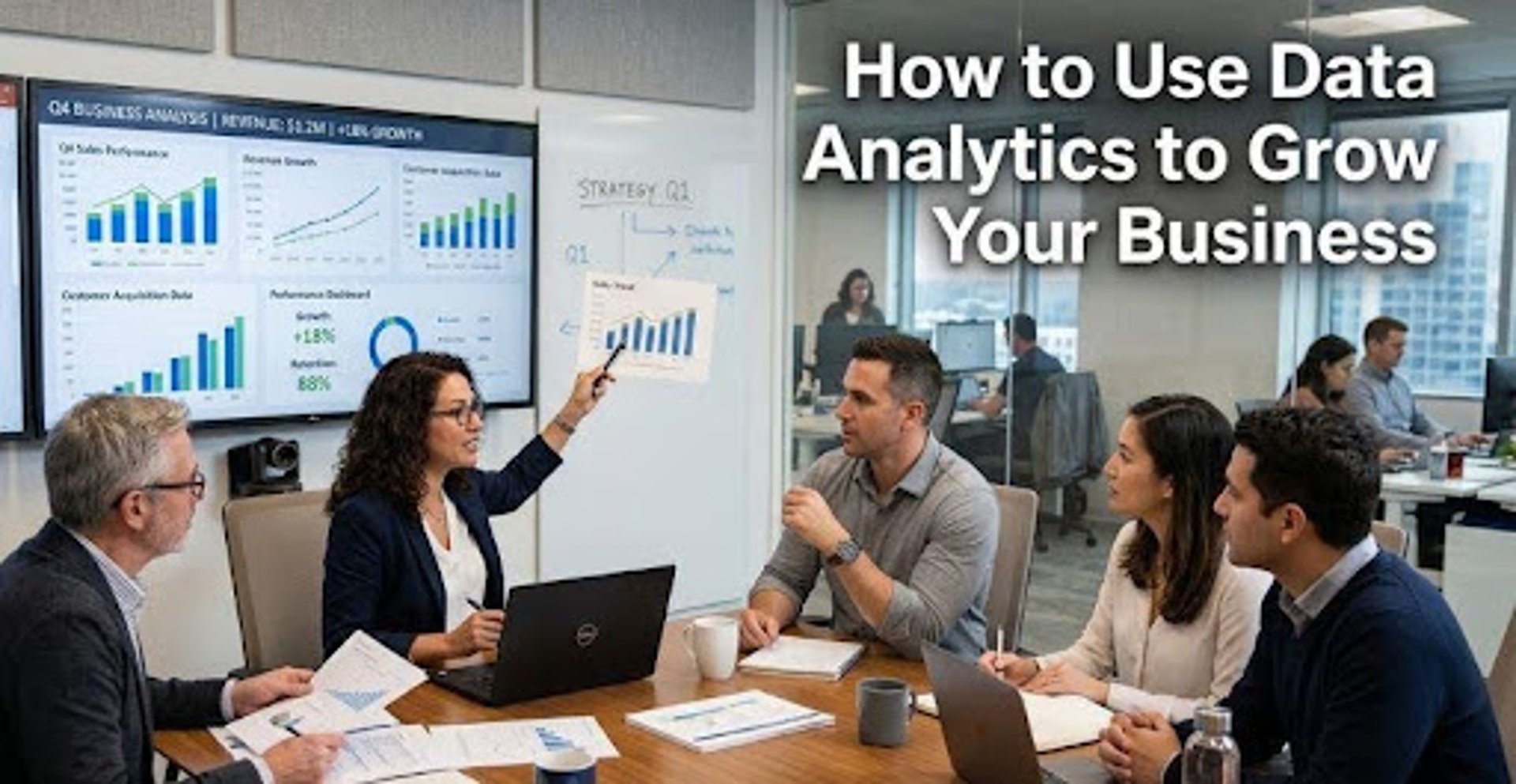
Businesses generate large amounts of data every day through websites, social media platforms, online stores, customer interactions, and sales activities. While collecting information is easier than ever, many companies still struggle to turn that data into meaningful results. Simply having access to data does not guarantee growth. What matters is how businesses use that information to make smarter decisions.
Companies that understand their customers, track performance, and identify trends often have a competitive advantage. Data analytics helps businesses find opportunities, improve efficiency, and reduce guesswork. Instead of relying on assumptions, business owners can use real information to guide their strategies and investments.
The importance of data-driven decision-making continues to increase as the data analytics market expands across industries. More organizations are investing in analytics tools to better understand customer behavior, improve operations, and identify new opportunities for long-term growth.
What Is Data Analytics?
Data analytics is the process of collecting, organizing, and reviewing data information to identify patterns, trends, and useful insights. Businesses use analytics to understand what is happening within their operations and to make informed decisions based on actual data.
The information can come from many sources, including website traffic, sales records, customer feedback, email campaigns, and social media activity. By studying this data, businesses can gain a clearer understanding of customer preferences and overall performance.
Instead of making decisions based on assumptions, companies can use analytics to understand what works, what needs improvement, and where future opportunities may exist.
Why Learning How to Use Data Analytics to Grow Your Business Matters
Business growth depends on making the right decisions at the right time. Without reliable information, companies may invest resources in strategies that fail to deliver results. Data analytics helps reduce uncertainty by providing evidence that supports better planning and decision-making.
Analytics also helps businesses understand market changes and customer needs more effectively. When companies know what their customers want, they can develop products, services, and marketing campaigns that are more likely to succeed.
In today's competitive environment, businesses that use data effectively often gain advantages over competitors who rely mainly on assumptions or outdated information.
How to Use Data Analytics to Understand Your Customers Better
Understanding customers is one of the most valuable benefits of data analytics. All interaction customers have with a business can provide useful information about their interests, preferences, and buying behaviour.
Businesses can study trends website visits, purchase history, customer feedback, and social media engagement to identify patterns. This information helps companies understand which products are popular, which services customers value most, and what factors influence purchasing decisions.
With these insights, businesses can create more personalized experiences, improve customer satisfaction, and build stronger relationships. Customers are more likely to remain loyal when they feel a company understands their needs.
How to Use Data Analytics to Improve Marketing Results
Marketing campaigns generate large amounts of data that can be used to improve performance. Businesses can track website traffic, conversion rates, email open rates, social media engagement, and advertising results to evaluate campaign effectiveness.
By looking at data this information, companies can identify which marketing channels deliver the best results and which campaigns need improvement. This allows businesses to focus their budgets on strategies that provide the highest return on investment.
Data analytics also helps marketers understand audience preferences. When businesses know which content attracts attention and drives engagement, they can create more effective marketing campaigns that reach the right people.
How to Use Data Analytics to Increase Sales Opportunities
Sales growth often depends on understanding customer demand and identifying opportunities to improve the buying process. Data analytics provides valuable information that helps businesses make smarter sales decisions.
Companies can evaluate results purchasing trends to identify high-performing products, seasonal demand patterns, and customer preferences. This information helps improve inventory planning and product recommendations.
Analytics can also help businesses identify potential customers who are more likely to make a purchase. By targeting the right audience with relevant offers, companies can improve conversion rates and increase overall revenue.
How to Use Data Analytics to Make Better Business Decisions
Many business decisions involve risk. Whether launching a new product, entering a new market, or investing in new technology, decision-makers need accurate information to evaluate their options.
Data analytics provides insights that help businesses assess opportunities and challenges more effectively. Instead of relying on opinions alone, managers can review real performance data before making important decisions.
This approach often leads to better outcomes because decisions are based on measurable facts rather than assumptions. Businesses that consistently use data in their decision-making process are often better prepared to adapt to changing market conditions.
How to Use Data Analytics to Improve Daily Business Operations
Data analytics is not only useful for sales and marketing. It can also help improve operational efficiency across different areas of a business.
Companies can monitor workflows, employee productivity, customer service performance, and resource utilization to identify areas where improvements can be made. Small inefficiencies that might otherwise go unnoticed can often be identified through analytics.
By improving operations, businesses can reduce costs, increase productivity, and create a better experience for both employees and customers. These improvements contribute to long-term growth and profitability.
Best Tools to Help You Use Data Analytics for Your Business
Many analytics tools are available today, making it easier for businesses of all sizes to collect and tracking performance data. The right tool depends on the specific goals and needs of the organization.
Website analytics platforms help businesses understand visitor behaviors and online performance. Customer relationship management systems provide insights into customer interactions and sales activities. Business intelligence tools help organizations examining information data from multiple sources and create detailed reports.
The most important factor is choosing tools that provide useful insights and are easy for teams to understand and use. Analytics should support decision-making rather than create unnecessary complexity.
Common Mistakes When Using Data Analytics for Business Growth
One common mistake is collecting too much data without a clear objective. Businesses should focus on information that directly supports their goals rather than gathering data simply because it is available.
Another mistake is ignoring data quality. Inaccurate or outdated information can lead to poor decisions and unreliable results. Maintaining accurate records is essential for effective analysis.
Some companies also make the mistake of focusing only on numbers without considering the broader business context. Data is valuable, but it should be combined with industry knowledge, customer feedback, and business experience to support balanced decision-making.
Future Trends in Data Analytics for Business Growth
Data analytics continues to evolve as technology advances. Artificial Intelligence, machine learning, and automation are helping businesses examining information more quickly and accurately than ever before.
Predictive analytics is becoming increasingly popular because it helps companies forecast future trends and identify opportunities before they occur. Businesses can use these insights to plan more effectively and stay ahead of competitors.
As data becomes even more important in business operations, organizations that develop strong analytical capabilities will be better positioned to achieve sustainable growth and long-term success.
Final Thoughts on How to Use Data Analytics to Grow Your Business
Learning how to use data analytics to grow your business can provide significant benefits. Analytics helps organizations understand customers, improve marketing performance, increase sales, optimize operations, and make smarter decisions.
Businesses that use data effectively are often able to identify opportunities faster, respond to market changes more efficiently, and create stronger customer experiences. Rather than relying on guesswork, they use real information to guide their strategies.
As competition continues to increase across industries, data analytics is becoming an essential tool for companies that want to achieve sustainable growth and long-term business success.
FAQs
What are data analytics in business?
Data analytics is the process of examining business data to identify trends, patterns, and insights that support better decision-making.How can data analytics help a business grow?
It helps businesses understand customers, improve marketing campaigns, increase sales, optimize operations, and make informed decisions.Can small businesses use data analytics?
Yes. Many affordable analytics tools are available that help small businesses track performance and identify growth opportunities.Which business areas benefit most from data analytics?
Marketing, sales, customer service, operations, and strategic planning are some of the areas that benefit most from analytics.Why is data-driven decision-making important?
It helps reduce uncertainty and allows businesses to make decisions based on facts rather than assumptions.
Lalit Sen


Lalit Sen is a digital marketing professional with experience in SEO, content marketing, and online brand growth. He has worked on content strategies across various industries, helping businesses improve their online visibility and reach the right audience. His interests include digital marketing trends, search engine optimization, business insights, and content development. Through his writing, he aims to provide readers with practical, well-researched, and easy-to-understand information that delivers real value.
Community
Company
Resources
© 2026. All rights reserved.