
Beginner's Guide to APIs: What They Are, How They Work, and Why Every Developer Needs to Know Them
New to tech? This beginner's guide to APIs explains exactly what APIs are, how they work, the different types, real-world examples, and expert tips written in plain English so anyone can understand APIs in one read.
TECHNOLOGY
4/15/202618 min read
In today’s fast-paced digital world, almost every app or website you interact with is powered by APIs. Whether you are booking a cab, scrolling through social media, checking the weather, ordering food, or making an online payment, APIs are constantly working behind the scenes to ensure everything runs smoothly and efficiently. They act as invisible connectors, allowing different platforms, systems, and services to communicate with each other in real time something that has become essential in our increasingly connected lives.
Despite being such a crucial part of modern technology, APIs often sound intimidating to beginners. The term itself can feel technical, and many people assume that understanding APIs requires advanced coding knowledge. This perception can make learners hesitant to explore a concept that is actually much simpler and more practical than it seems. In reality, APIs are designed to simplify processes, not complicate them.
The good news is that APIs are far more approachable than they appear. When you break the concept down into everyday language and relatable examples, it becomes much easier to grasp how they function and why they are so important. You don’t need to be a developer or a tech expert to understand the basics just a willingness to learn and explore how digital systems interact.
This beginner-friendly guide is created to help you do exactly that. Instead of diving into complex jargon, it explains APIs in a clear, conversational, and practical way that anyone can follow. By the end of this blog, you will not only understand what APIs are, but also how they work in real-life scenarios, why businesses and developers rely on them, and how you can start learning and using APIs in your own journey whether you are interested in technology, digital marketing, or simply curious about how the digital world operates behind the screen.
What Are APIs
API stands for Application Programming Interface. In simple terms, APIs are a set of rules and protocols that allow different software applications to communicate with each other. Instead of building every feature or service from scratch, developers use APIs to connect systems, access data, and perform specific functions efficiently.
In today’s interconnected digital environment, applications rarely work in isolation. For example, when an app needs to display maps, process payments, or fetch user data, it doesn’t create these services on its own. Instead, it relies on APIs provided by other platforms. This not only saves time and effort but also ensures reliability, scalability, and faster development.
To make this easier to understand, imagine you are at a restaurant. You don’t go into the kitchen to cook your food. Instead, you place your order with a waiter. The waiter takes your request to the kitchen, communicates it clearly, and then brings your prepared food back to you. In this scenario, the waiter acts as the API. You don’t need to know how the kitchen operates, what ingredients are used, or how the dish is prepared you simply receive the final result you asked for.
Similarly, APIs act as intermediaries between applications. When you perform an action like clicking a button, searching for something, or logging into a website the API takes your request and sends it to the appropriate server. The server processes the request and sends back the required information, which the API then delivers to your application in a structured and understandable format.
One of the most important advantages of APIs is that they hide the internal complexity of systems. Developers don’t need to understand how another platform is built or how its backend works. They only need to know how to interact with the API using predefined rules. This makes development faster, more efficient, and less error-prone.
In essence, APIs act as the building blocks of modern software. They enable seamless communication between different technologies, making it possible for apps and websites to deliver smooth, fast, and integrated user experiences without reinventing the wheel every time.
Why Are APIs Important
APIs play a crucial role in modern technology because they enable seamless integration and communication between different systems. In a world where multiple applications, platforms, and devices need to work together, APIs act as the backbone that keeps everything connected. Without APIs, applications would operate in isolation, making it difficult to share data, collaborate across platforms, or deliver the smooth digital experiences users expect today.
One of the biggest advantages of APIs is efficiency. Instead of building every feature from scratch, developers can leverage existing APIs to add functionalities like payment processing, location tracking, or social media integration. This not only saves significant time and development effort but also reduces costs and minimizes errors. By reusing reliable services, businesses can focus more on innovation rather than reinventing basic functionalities.
APIs also play a major role in scalability and flexibility. APIs make it easier to expand systems by integrating new tools and services without completely redesigning existing infrastructure. For example, an e-commerce website can easily add new payment gateways, shipping services, or analytics tools using APIs, allowing the business to scale quickly and adapt to changing market demands.
From a user’s perspective, APIs enhance convenience and improve overall experience. A common example is logging into a website using your Google or social media account. Behind the scenes, an API connects the website with the authentication service, verifies your identity, and grants access within seconds. This eliminates the need to create and remember multiple usernames and passwords, making the process faster, smoother, and more user-friendly.
APIs are also essential for real-time data access. Whether it’s checking live weather updates, tracking a delivery, or viewing stock prices, APIs ensure that users receive accurate and up-to-date information instantly. This real-time functionality has become a standard expectation in today’s digital landscape.
In the field of digital marketing, APIs are incredibly powerful. They help automate repetitive tasks, integrate various marketing tools, and create personalized user experiences. For instance, APIs allow marketers to connect email marketing platforms with customer data systems, automate campaign workflows, track user behavior, and deliver targeted content. This level of automation and personalization helps businesses improve engagement, increase conversions, and make data-driven decisions more effectively.
Ultimately, APIs are not just technical tools they are enablers of innovation. They allow businesses to collaborate, experiment, and build better digital products faster. Whether you are a developer, marketer, entrepreneur, or even a beginner exploring technology, understanding the importance of APIs can open up new opportunities and give you a deeper insight into how the digital world functions so seamlessly.
How Do APIs Work
To understand how APIs work, it helps to break the process down into simple, step-by-step actions. Every time you interact with an application whether it’s clicking a button, searching for something, or submitting a forma request is sent to an API. This request includes specific details about what you want the system to do, such as retrieving data, updating information, or performing a particular action.
The process begins when the user initiates an action. For instance, when you open an app and search for a product, your request doesn’t go directly to the database. Instead, it is first handled by an API. The API acts as a gateway that receives your request and understands what kind of response is needed.
Once the API receives the request, it communicates with the appropriate server or database. This is where the actual processing happens. The server checks the request, performs the required operation such as fetching data, validating information, or saving new entries and prepares a response.
After processing the request, the server sends the result back to the API. The API then takes this response and formats it in a way that the application can easily understand. This is important because different systems may store or process data differently, and the API ensures that the output is structured and usable.
Finally, the application receives the response from the API and displays it to the user in a clear and readable format. All of this happens within seconds, often without the user even realizing the complexity behind the scenes. This smooth flow of request and response is what makes modern apps fast, interactive, and user-friendly.
To make this more relatable, consider the example of checking the weather on your phone. When you open a weather app, it sends a request to a weather API asking for the latest data for your location. The API then connects to a weather server, retrieves real-time information such as temperature, humidity, and forecast, and sends it back to your app. Within moments, you see updated weather details on your screen.
Another common example is online shopping. When you search for a product, APIs fetch product listings, prices, and availability from different databases. Similarly, when you make a payment, APIs securely connect your app with payment gateways to complete the transaction.
In essence, APIs work as efficient messengers that handle communication between systems. They ensure that requests are delivered correctly, responses are accurate, and users get the information they need quickly and effortlessly. Understanding this flow is key to grasping how most digital services function behind the scenes.
Types of APIs
APIs are categorized based on their accessibility, usage, and the kind of interactions they support. Understanding these different types will give you a clearer picture of how APIs function in various real-world scenarios and why they are so widely used across industries.
Open APIs (Public APIs)
Open APIs, also known as public APIs, are available for anyone to use. These APIs are designed to be accessible to developers, businesses, and even beginners who want to experiment or build applications. Companies provide public APIs so others can integrate their services into different platforms.
For example, apps that use maps for navigation rely on public APIs provided by mapping services. Similarly, weather apps use public APIs to fetch real-time weather data. Social media platforms also offer APIs that allow developers to integrate features like sharing, login, or displaying feeds. These APIs often come with documentation, making them easier to learn and implement.
Partner APIs
Partner APIs are shared between specific businesses or trusted partners. Unlike public APIs, they are not open for everyone and require proper authentication and permissions to access. These APIs are commonly used for secure collaborations between organizations.
For instance, a travel booking website might use partner APIs to connect with airlines or hotel chains. This allows them to display real-time availability, pricing, and booking options directly on their platform. Partner APIs ensure that data sharing remains secure while enabling smooth business operations.
Internal APIs (Private APIs)
Internal APIs, also known as private APIs, are used within an organization. These APIs are not exposed to external users and are designed to improve internal communication between systems, teams, or departments.
For example, a company might have separate systems for managing customers, orders, and inventory. Internal APIs allow these systems to communicate with each other seamlessly. This improves efficiency, reduces manual work, and ensures that all systems stay updated with accurate information.
Composite APIs
Composite APIs are designed to handle multiple requests in a single call. Instead of making separate API calls for different pieces of data, a composite API gathers all the required information at once and returns it in a single response.
This is especially useful in complex applications where multiple data sources are involved. For example, an e-commerce app might need product details, user information, and payment options all at the same time. Using a composite API reduces the number of interactions between systems, improves performance, and speeds up the overall user experience.
Common API Protocols
APIs rely on specific protocols or standards to communicate effectively between systems. These protocols define how requests are made, how data is structured, and how responses are delivered. Understanding them helps you see how different APIs operate and why certain ones are preferred in specific situations.
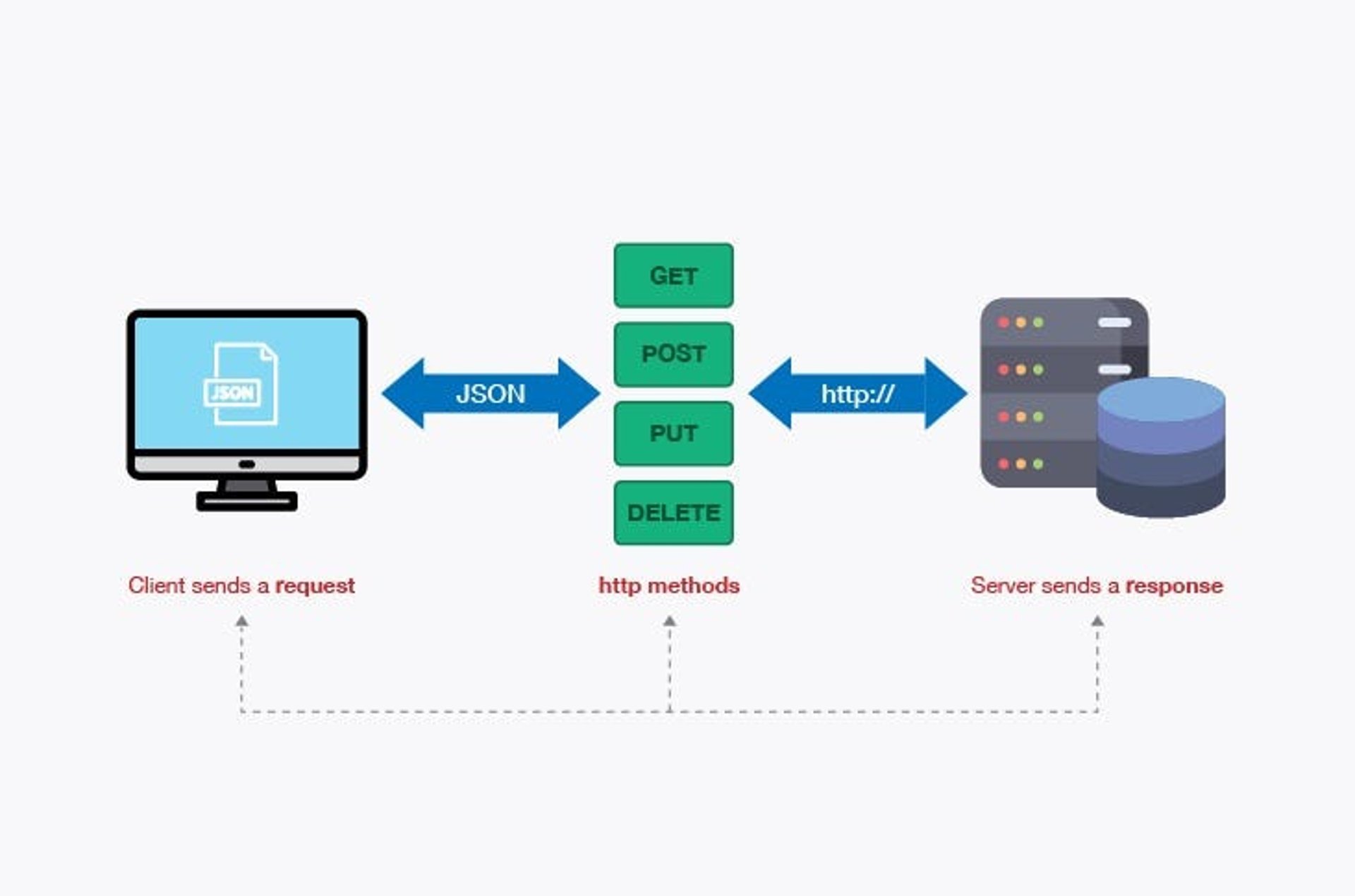
One of the most commonly used protocols is REST (Representational State Transfer). REST APIs are popular because they are simple, flexible, and work seamlessly with web technologies. They use standard HTTP methods like GET, POST, PUT, and DELETE, making them easy for developers to understand and implement. REST APIs are widely used in web and mobile applications due to their lightweight nature and scalability.
Another important protocol is SOAP (Simple Object Access Protocol). SOAP is more structured and follows strict rules compared to REST. It uses XML format for data exchange and includes built-in security features, making it a reliable choice for enterprise-level applications such as banking systems or financial services. However, its complexity and heavier structure make it less flexible and harder to work with compared to REST.
A more modern approach is GraphQL, which is gaining popularity for its efficiency and flexibility. Unlike REST, where you often receive a fixed set of data, GraphQL allows users to request only the specific data they need. This reduces unnecessary data transfer and improves performance, especially in applications with complex data requirements. It is widely used in modern web and mobile apps where performance and customization are priorities.
Each of these protocols serves a different purpose. REST is ideal for general use and simplicity, SOAP is best for secure and structured environments, and GraphQL is perfect for applications that require flexibility and efficiency. Understanding these differences helps developers choose the right approach based on their needs.
Understanding API Requests and Responses
At the core of every API interaction is a simple concept: request and response. This is the fundamental process that allows applications to communicate and exchange data.
A request is sent by the client, which could be a mobile app, a website, or even another server. This request includes several important components. It specifies the endpoint (the URL where the request is sent), the method (such as GET or POST), and additional details like headers and parameters. These elements help the API understand exactly what the client is asking for.
Once the API receives the request, it processes it by communicating with the server or database. After performing the necessary action such as retrieving data, saving information, or updating records the server prepares a response.
The response is then sent back to the client. It contains the requested data along with a status code, which indicates whether the request was successful or if an error occurred. For example, a status code of 200 means success, while 404 indicates that the requested resource was not found.
Most modern APIs use JSON (JavaScript Object Notation) as the format for responses. JSON is lightweight, easy to read, and simple to parse, making it ideal for fast data exchange between systems.
To understand this better, consider a weather app. When you request weather information for your city, the app sends a request to an API. The API processes the request and returns a response containing data like temperature, humidity, and weather conditions. This data is structured in JSON format and then displayed in a clean, user-friendly way on your screen.
Understanding how requests and responses work is essential because it forms the foundation of all API interactions. Once you grasp this concept, working with APIs becomes much more intuitive, whether you are testing them, integrating them, or building your own applications.
Real-World Examples of APIs
APIs are deeply integrated into almost every digital service you use, even if you don’t realize it. They work quietly in the background, connecting multiple systems and ensuring everything functions smoothly. Understanding real-world examples can make the concept of APIs much more relatable and easier to grasp.
One of the most common examples is online payment gateways. When you make a payment on a website or app, multiple systems need to communicate instantly your bank, the payment processor, and the merchant’s platform. APIs handle this entire process by securely transmitting your payment details, verifying the transaction, and confirming whether the payment was successful. All of this happens within seconds, giving you a seamless checkout experience.
Another everyday example is social media login. When you click on “Login with Google” or “Login with Facebook,” you are using an API. Instead of creating a new account, the website sends a request to the social media platform to verify your identity. Once authenticated, the API allows you to log in instantly. This not only saves time but also enhances user convenience and reduces friction during sign-up.
Navigation and map services are also powered by APIs. Apps use APIs to fetch real-time location data, calculate routes, estimate travel time, and even suggest alternative paths based on traffic conditions. Without APIs, these features would require massive infrastructure and data processing capabilities.
In the world of e-commerce, APIs play a major role in managing operations. They help display product listings, update inventory in real time, process orders, handle payments, and track deliveries. For example, when you place an order, APIs ensure that stock levels are updated, payment is processed, and shipping details are shared with logistics providers all in a coordinated manner.
Even weather apps, food delivery platforms, and streaming services rely heavily on APIs to deliver real-time data and personalized experiences. These examples clearly show how APIs simplify complex processes, connect multiple systems, and provide a smooth and efficient user experience.
APIs in Digital Marketing
APIs have become a powerful tool in digital marketing, enabling marketers to work smarter, automate tasks, and create more personalized experiences for users. In a field where data, speed, and customer engagement are critical, APIs help bridge the gap between different tools and platforms.
One of the key uses of APIs in digital marketing is integration. Marketers often use multiple tools such as email marketing platforms, customer relationship management (CRM) systems, analytics tools, and social media platforms. APIs allow these tools to connect and share data seamlessly. For instance, when a user signs up on a website, their information can automatically be sent to an email marketing tool using an API, triggering a welcome email instantly.
APIs also play a major role in automation. Repetitive tasks such as sending emails, updating customer records, or tracking campaign performance can be automated using APIs. This not only saves time but also reduces manual errors and increases efficiency. Marketers can focus more on strategy and creativity rather than routine operations.
Another important benefit is personalization. APIs enable marketers to collect and analyze user data from different sources. This data can then be used to create highly targeted campaigns. For example, based on a user’s browsing behavior or past purchases, APIs can help deliver personalized product recommendations, customized emails, or relevant ads. This level of personalization significantly improves user engagement and conversion rates
APIs are also essential for data analysis and performance tracking. They allow marketers to integrate analytics tools that provide insights into user behavior, campaign performance, and ROI. With real-time data access, businesses can make informed decisions and optimize their marketing strategies more effectively.
In today’s competitive digital landscape, APIs are not just a technical feature they are a strategic advantage. They empower marketers to build connected ecosystems, deliver better customer experiences, and drive growth through data-driven decisions.
API Security Basics
Since APIs handle data exchange, security is a major concern. Without proper protection, APIs can be vulnerable to attacks and data breaches.
To prevent this, APIs use security measures such as API keys, which act as unique identifiers for access. OAuth is another method used for secure authentication, especially in social media logins.
Encryption ensures that data is protected during transmission, while rate limiting prevents misuse by restricting the number of requests a user can make.
Understanding these basics is important for anyone working with APIs.
Advantages of APIs
APIs offer numerous benefits, making them an essential part of modern development. They enable faster development by allowing developers to reuse existing functionalities. They also improve user experience by enabling seamless integration between platforms.
APIs provide flexibility, allowing businesses to adapt to changing needs. They are cost-effective because they reduce the need for building features from scratch. Overall, APIs make systems more efficient, scalable, and user-friendly.
Challenges of APIs
Despite their many advantages, APIs also come with certain challenges that developers and businesses need to consider. Being aware of these limitations is important for building reliable and secure systems.
One of the biggest concerns is security. Since APIs often handle sensitive data such as personal information, payment details, or login credentials they can become targets for cyberattacks. If not properly secured, APIs can expose data to unauthorized users. This is why measures like authentication, encryption, and API keys are essential to protect data and ensure safe communication between systems.
Another challenge is dependency on third-party APIs. Many applications rely on external services for key functionalities, such as payment processing, maps, or authentication. While this saves development time, it also creates a dependency. If the third-party API experiences downtime, performance issues, or is discontinued, it can directly impact your application’s functionality and user experience.
Maintenance and updates are also critical challenges. APIs need to be regularly updated to improve performance, fix bugs, and enhance security. However, these updates can sometimes lead to compatibility issues. For example, if an API provider releases a new version with changes in structure or functionality, existing integrations may stop working unless they are updated accordingly.
This leads to another common issue: versioning. When APIs evolve, different versions may exist simultaneously. Managing these versions can become complex, especially when multiple systems depend on different versions of the same API. Without proper version control, updates can break existing applications and disrupt services.
Additionally, there can be challenges related to performance and rate limits. Some APIs restrict the number of requests you can make within a certain time frame. Exceeding these limits can result in errors or temporary access blocks, which can affect the performance of your application.
Understanding these challenges helps developers and businesses plan better, choose reliable APIs, and implement strategies to minimize risks. With proper management and best practices, most of these challenges can be effectively handled.
Beginner Tips to Learn APIs
If you are new to APIs, the best way to start is by building a strong foundation with the basics. APIs may seem technical at first, but with the right approach, they can become easy and even enjoyable to learn.
Start by understanding basic concepts such as how APIs work, what requests and responses are, and how data flows between systems. Learning common HTTP methods like GET (to retrieve data) and POST (to send data) is a great first step, as these are the most frequently used in API interactions.
It is also important to get familiar with JSON (JavaScript Object Notation), as it is the most commonly used format for API responses. JSON is simple to read and understand, and learning how to interpret it will help you work with APIs more effectively.
Using tools like Postman can make your learning process much easier. Postman allows you to send API requests and view responses without writing complex code. It’s a beginner-friendly tool that helps you understand how APIs behave in real time.
Another effective way to learn is through hands-on practice. Explore free public APIs such as weather APIs, news APIs, or quote generators. Try making requests, analyzing responses, and experimenting with different endpoints. This practical experience will help you connect theory with real-world usage.
As you progress, you can start learning a programming language like JavaScript or Python to interact with APIs programmatically. This will open up more opportunities to build projects such as simple apps, dashboards, or automation tools.
Most importantly, stay consistent and patient. Learning APIs is a gradual process, and it’s normal to feel confused in the beginning. Focus on small concepts, practice regularly, and build simple projects. Over time, you will gain confidence and develop a clear understanding of how APIs work. With the right mindset and consistent effort, APIs can become one of the most valuable skills in your tech or digital marketing journey.
Expert Advice for Beginners
When it comes to learning APIs, experts consistently emphasize one key principle: focus on practical learning rather than getting lost in theory. While understanding concepts is important, real growth happens when you start applying what you learn. Instead of trying to memorize technical definitions, begin with small, hands-on projects.
For example, you can build a simple weather app, fetch data from a public API, or integrate an API into a basic website. These small projects help you understand how APIs work in real scenarios.
Another essential skill that beginners should develop is reading API documentation. Every API comes with its own set of instructions that explain how to use it, including available endpoints, request methods, parameters, and response formats. At first, documentation may seem overwhelming, but with practice, it becomes much easier to navigate. Learning how to read and interpret documentation will empower you to work with almost any API confidently.
Experts also recommend developing a mindset of experimentation and curiosity. Don’t be afraid to try new things, test different endpoints, or even make mistakes. Errors are a natural part of the learning process and often teach you more than success does. The more you experiment, the better you will understand how APIs behave in different situations.
Consistency is another important factor. Instead of trying to learn everything in one go, dedicate a small amount of time regularly to practice. Over time, your understanding will deepen, and concepts that once seemed confusing will start to make sense.
Lastly, focus on understanding the flow of data how requests are sent, how responses are received, and how information is processed. Once you grasp this flow, working with APIs becomes much more intuitive. With patience, practice, and the right approach, you can build strong API skills that are valuable across multiple career paths.
Future of APIs
The future of APIs is incredibly promising, as they continue to play a central role in shaping the digital world. With advancements in technology, APIs are becoming more powerful, flexible, and essential for innovation across industries.
One of the biggest drivers of API growth is artificial intelligence. AI-powered APIs are enabling advanced capabilities such as voice recognition, image processing, chatbots, and predictive analytics. These APIs allow developers and businesses to integrate intelligent features into their applications without building complex AI systems from scratch.
Another major factor is the rise of cloud computing. Cloud platforms rely heavily on APIs to connect services, manage data, and enable seamless scalability. This makes it easier for businesses to build and expand applications without worrying about infrastructure limitations.
Modern technologies like GraphQL are also shaping the future of APIs by offering greater efficiency and flexibility. By allowing users to request only the data they need, GraphQL reduces unnecessary data transfer and improves performance, especially in complex applications.
Additionally, many organizations are adopting an API-first approach. This means APIs are designed before the actual application is built. By prioritizing APIs from the beginning, businesses can ensure better integration, smoother development, and easier scalability across platforms.
As technologies like the Internet of Things (IoT), automation, and real-time data systems continue to evolve, APIs will remain at the core of innovation. They will continue to connect devices, applications, and services, making digital experiences smarter and more interconnected than ever before.
Conclusion
APIs are truly the backbone of modern digital experiences. They enable different systems to communicate seamlessly, making applications smarter, faster, and more efficient. From everyday activities like online shopping and social media to advanced technologies like AI and cloud computing, APIs are at the heart of it all.
For beginners, learning APIs might feel challenging in the beginning, especially if you are new to technical concepts. However, with the right approach, it becomes much more manageable. By understanding the basics, exploring real-world examples, practicing regularly, and building small projects, you can gradually develop confidence and expertise.
APIs are not just for developers they are equally valuable for digital marketers, entrepreneurs, and business owners. They open up opportunities to automate tasks, integrate tools, and create better user experiences. In a world that is becoming increasingly digital, having a basic understanding of APIs can give you a significant advantage.
The key is to stay curious, keep experimenting, and learn by doing. With time and consistent effort, APIs can become one of the most powerful skills in your toolkit, helping you grow and succeed in today’s fast-evolving digital landscape.
FAQs About APIs
What is an API in simple terms?
An API is a tool that allows two applications to communicate and share data.
Are APIs only for developers?
No, APIs are also useful for marketers and businesses for automation and integration.
Is learning APIs difficult?
No, beginners can learn APIs easily with practice and the right resources.
What format do APIs use?
Most APIs use JSON format for data exchange.
Can I use APIs without coding?
Yes, tools like Postman and no-code platforms make it possible to use APIs without deep coding knowledge.
Community
Company
Resources
© 2026. All rights reserved.